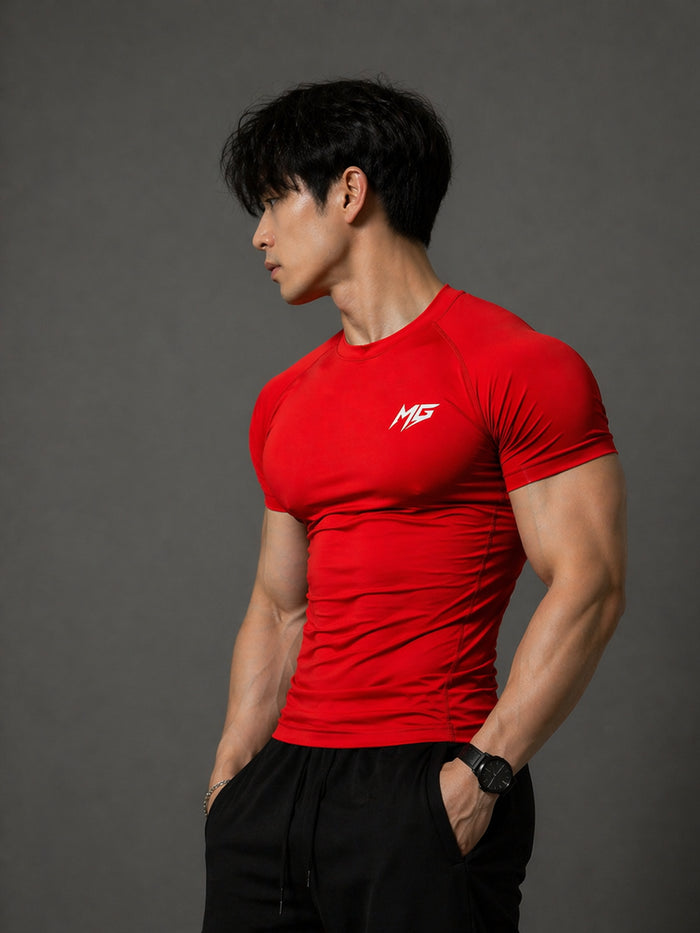
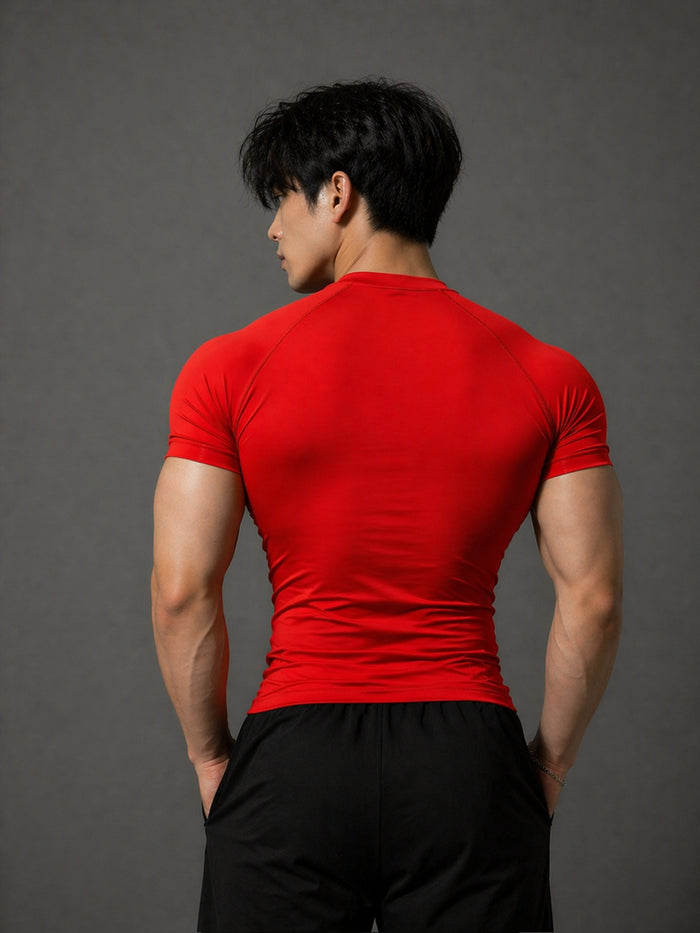
Key takeaways
- Comfort and support: a compression T-shirt holds close to your body, reduces fabric and muscle movement, and manages sweat.
- Recovery: research reviews consistently link compression garments with lower perceived muscle soreness after hard exercise, although the size of the effect varies between studies.
- Performance: evidence for a direct performance boost is limited, but compression doesn't appear to hurt performance either.
- Fit is everything: snug like a firm hug, never painful, numb or restrictive.
Compression T-shirts have become a gym essential. They're worn by lifters, runners and athletes, often with big promises attached. But what do compression shirts actually do, and what does the research say? This guide separates the real benefits from the hype, so you know exactly what you're buying.
What is a compression T-shirt?
A compression T-shirt is made from a high-stretch fabric, typically nylon or polyester blended with spandex (elastane), and cut to fit tightly against your skin. Instead of hanging loose like a regular T-shirt, it applies gentle, even pressure across your chest, back and arms and moves with you.

Compression vs regular vs oversized gym T-shirts
| Compression | Regular gym tee | Oversized tee | |
|---|---|---|---|
| Fit | Skin-tight | Comfortable | Loose, dropped shoulder |
| Fabric | Nylon/poly + spandex | Cotton or blends | Usually cotton |
| Sweat management | High | Medium | Medium (airflow) |
| Best for | Training, running, base layer | Everyday workouts | Warm-ups, pump cover, streetwear |
Compression T-shirt benefits: what the research says
1. Less perceived muscle soreness after training
This is the most consistently reported benefit. A 2022 systematic review of 160 studies on compression garments, published in the journal Textiles, found that compression garments are consistently associated with decreases in perceived muscle soreness after fatiguing exercise. Some newer reviews find the effect is smaller and less certain in specific groups, such as endurance athletes, so treat it as a helpful bonus, not a cure.
2. Reduced muscle movement
A snug fit limits how much your muscles bounce and vibrate with each step, jump or rep. Researchers call this muscle oscillation. Many people find it makes running and explosive movements feel more controlled and comfortable.
3. Better sweat management
Performance compression fabrics are designed to pull sweat away from your skin towards the outer surface, where it evaporates faster. Compared with a cotton T-shirt that soaks up sweat and gets heavy, a good compression tee keeps you feeling drier during hard sessions.
4. A secure, focused feel
Many athletes simply like the "locked-in" feeling of compression. Nothing flaps around during push-ups, pull-ups or burpees, and that sense of support can help you focus on your training.
5. An efficient base layer
Under a jacket or hoodie on cold mornings, a compression tee gives you a smooth, close layer without bulk, and it pairs perfectly with a quarter-zip for warm-ups.
What compression T-shirts don't do
Let's be honest about the limits. The same 2022 review found that during exercise, compression garments have a limited effect on overall endurance performance. In other words:
- A compression shirt won't make you stronger. Strength comes from training, nutrition and sleep.
- It won't burn fat or "sweat out" weight.
- It's not a medical device. If you have an injury or circulation condition, follow your doctor's advice.
The good news: research has generally not found compression garments to harm performance, so if you like how one feels, there's no downside to wearing it.
How should a compression T-shirt fit?
- Snug everywhere: no loose or wrinkled fabric on the chest, back or arms.
- Full range of motion: you can raise your arms overhead, twist and squat without the shirt riding up or holding you back.
- Comfortable breathing: it should never feel hard to take a deep breath.
- No numbness or deep marks: tingling arms or sleeves that leave deep red lines mean it's too small. Go one size up.
Always check the size guide on the product page before ordering, as compression sizing is tighter than regular sizing by design.

When to wear a compression T-shirt
- Strength training: lifts, push-ups, pull-ups and bodyweight circuits.
- Running and conditioning: less muscle movement and better sweat control.
- Functional and hybrid training: sessions that mix running, lifting and carrying. Pair it with a HYGHX quarter-zip for warm-ups.
- After training: some people wear compression for a few hours after a hard session for the recovery feel.
- As a base layer under jackets in cooler weather.

How to care for compression wear
- Wash cold, inside out, with similar colours.
- Skip fabric softener and bleach. They can affect stretch and sweat-wicking.
- Air-dry in shade instead of tumble drying, because heat damages spandex over time.
- Always follow the care label on your garment.
Frequently asked questions
What does a compression shirt actually do?
It fits tightly to support your muscles, reduce muscle and fabric movement, and pull sweat away from your skin. Research reviews also link compression garments with lower perceived muscle soreness after hard exercise.
Do compression shirts improve performance?
The evidence for a direct performance boost is limited. Reviews find little effect on overall endurance performance, but compression also doesn't appear to harm performance, and many athletes value the comfort and support.
Can I wear a compression T-shirt all day?
You can wear it for training and a few hours after, as long as it feels comfortable. If you feel numbness, tingling or discomfort, take it off and consider a larger size.
Should a compression shirt be tight?
Yes, snug like a firm hug, but never painful. You should be able to breathe deeply and move freely without the shirt riding up.
Is a compression T-shirt good for running?
Many runners like it because it reduces muscle bounce and manages sweat. Choose a breathable, sweat-wicking fabric and a size that doesn't restrict your arm swing.
Compression shirt or oversized T-shirt for the gym?
Both work. Compression gives a close, supportive fit for training, while an oversized tee gives a relaxed fit for warm-ups and everyday wear. Many people wear an oversized tee over compression as a pump cover.
Train in the Roar Compression Series
Our Roar Compression T-Shirts are made from a high-stretch nylon spandex fabric that is sweat-wicking, breathable and built to move with every rep. Pick your colour, check the size guide and train with a fit that stays put.